
Written by: Hanna Matthews, MS

Behind every glass of milk is a story backed by science, stewardship, and family farms. Explore the facts and figures that show how dairy delivers exceptional nutrition while advancing animal care and sustainability.
KEY TAKEAWAYS
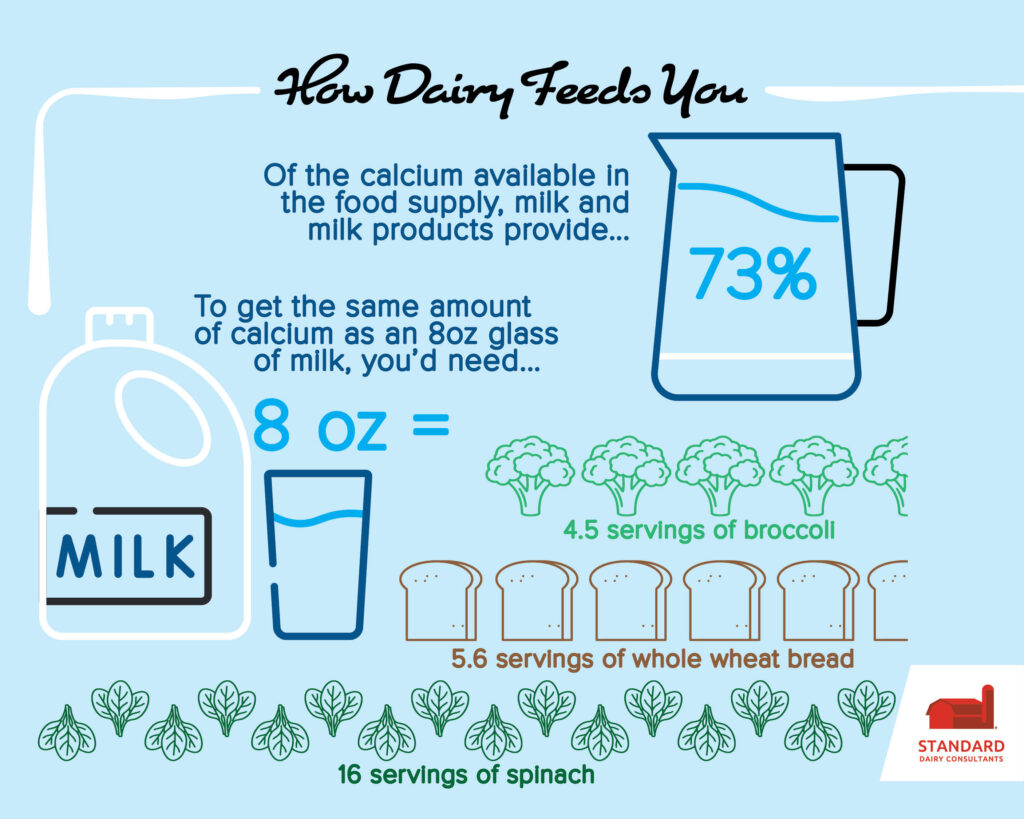
- Dairy foods provide more than half of the calcium and Vitamin D consumed by Americans, and 73% of the calcium in the entire U.S. food supply.
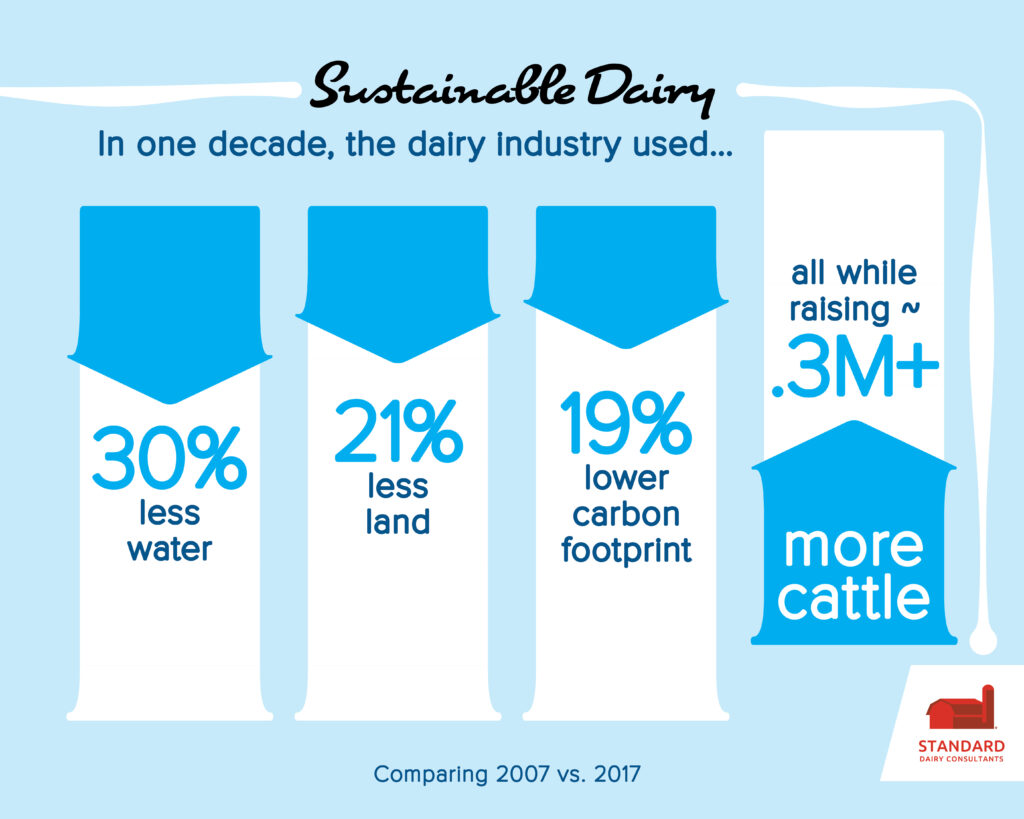
- The industry now uses 30% less water, 21% less land, and generates a 19% smaller carbon footprint than it did in 2007.
- 97% of U.S. dairy farms are family owned and operated, supporting nearly 900,000 jobs nationwide.
- Feed additives — including plant extracts, fats, and oils — can reduce methane emissions by approximately 30% or more.
- Milk is the most economical source of all 13 essential nutrients, at roughly $0.60 for three servings.
HOW DO WE APPROACH CONSUMERS
ABOUT THE DAIRY INDUSTRY?
Today’s consumers are all about facts and transparency. They want to know where their food products come from and how the animals that provide them are cared for. June Dairy Month is a great time for dairy producers to educate consumers about the industry, clear up misconceptions, and promote the abounding health benefits of dairy products.
It can be as simple as a short, transparent conversation about the dairy industry. Being prepared with facts that consumers find interesting can go a long way in improving their perspective about the industry. A survey done by Midwest Dairy showed that nearly 9 in 10 consumers across their 10-state region (upper Midwest) love dairy and that over 80% of those surveyed view dairy as nutritious and used it in their home-cooking. Consumers have been wanting more high-protein and lactose-free options, and the dairy industry has heard those wants and has stepped up production on yogurt, cottage cheese, and lactose-free milk. Continuing to listen to consumers and educating them will ensure that dairy industry’s growth will continue.
What about non-dairy users? How do we approach these consumers? Many consumers who are out-of-touch with agriculture want (and need) the facts. With social media, it is easy for many consumers to see edge-cases that promote misconceptions about the dairy industry. However, it can also be easy to platform the truths and realities of the industry. Full transparency and facts backed by research/articles can help even non-milk drinkers feel connected to the dairy industry.
Standard Nutrition Company has been part of this industry through a lot — through consolidation, through market swings, through every shift in how dairy is produced, processed, and perceived. It started in 1886, when veterinarian F.E. Sanborn began offering nutritional supplements to family farmers and watched their production improve. Farmers noticed. Word spread. What became The F.E. Sanborn Company eventually became Standard Nutrition Company, but the thing that hasn’t changed in 140 years is the reason we show up: our producers, and their needs. In 2026, that’s still the whole job.
In celebration of June Dairy Month and Standard’s 140th anniversary, we’ve compiled some of the facts that tell this industry’s story in numbers that speak for themselves.
DAIRY HEALTH: HOW DAIRY FEEDS US
- Dairy foods provide 52% of the calcium, 51% of the Vitamin D, and 17% of the protein consumed by Americans.
- Milk can help cool down your mouth after spicy food because of the protein casein. It helps to cleanse your taste buds.
- Healthy lifestyle, including eating dairy foods, are linked to a reduced risk of Type 2 Diabetes and cardiovascular diseases in adults.
- Dairy foods also help improve bone health and reduce inflammation.
- Milk and yogurt are a good source of zinc, which is important in normal immune function.
- Historically in areas where the enzyme, lactase, that digests lactose (found in dairy products) persists into adulthood, there is an increase in body mass and stature meaning milk really does make you bigger. This is likely because being able to utilize dairy products for energy allowed our ancestors to grow larger than they could without the ability to digest lactose.
- Civilizations that did not develop lactase persistence into adulthood or relied more on hunting/gathering rather than farming are shown to be smaller in stature.
- Lactose-free milk contains all the nutrients of regular milk, just without lactose.
- Milk is the most economical source of all 13 essential nutrients, costing only about $0.60 for 3 servings.
DAIRY COWS: HOW COWS GIVE MILK
- The average cow chews about 50 times a minute.
- Cows eat about 100 lbs of feed per day, which is like 600 PB & J sandwiches.
- Dairy cows have one stomach with 4 compartments: Reticulum, Rumen, Abomasum, and Omasum.
- Dairy cows are red-green color blind—they can’t see red!
- Cows can go upstairs but can’t go downstairs due to how their knees bend.
- Cows can smell up to 6 miles away!
- Cows don’t sweat efficiently, so they lose heat through their breath.
- Cows prefer temperatures around 40-65 degrees.
- Cows don’t have top front teeth, just a tough pad.
- You can tell how old a cow is by their teeth.
DAIRY INDUSTRY: HOW DAIRY IS BROUGHT TO CONSUMERS
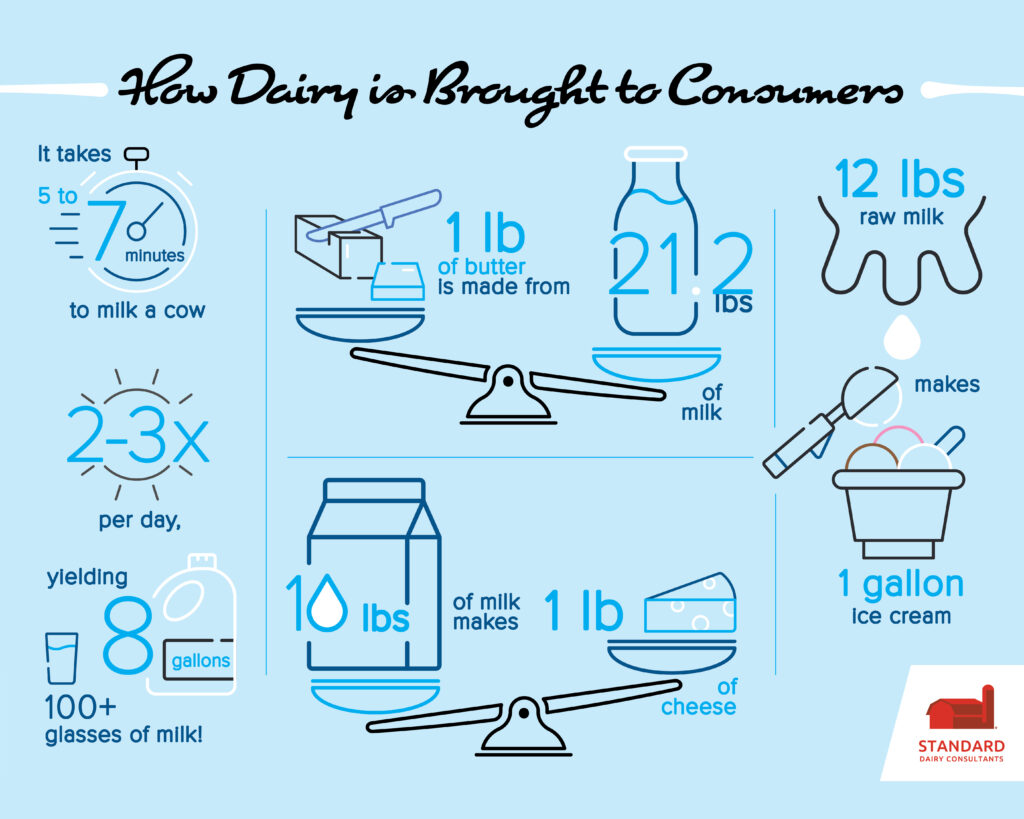
- Milk arrives at the local grocery store within 48 hours of leaving the dairy!
- 97% of U.S. Dairy farms are family owned and operated and the dairy industry accounts for nearly 900,000 of the country’s jobs.
DAIRY SUSTAINABILITY: HOW DAIRY WILL CONTINUE
- The dairy industry uses at least 32 million to 41 million metric tons per year of byproducts from crops or food manufacturing in dairy cow diets, which might otherwise end up in landfills.
- Some feed additives, such as plant extracts, fats, oils, or other products, can help reduce methane emissions by approximately 30% or more.
- 99% of the milk supply comes from farms enrolled in the FARM (National Dairy Farmers Assuring Responsible Management) Care Program to ensure the animals are being treated humanely.
- More than 450 trained, second party evaluators have conducted more than 90,000 on-farm evaluations since the program’s creation in 2009.
The dairy industry is robust and growing in the United States as demand for more high-protein and lactose-free food options grows. Many consumers are removed from agriculture but are very curious about where their food comes from. Sometimes, all the consumer wants are basic facts about the cows that are producing their cheese, milk, or ice cream. These facts can be used to start a conversation with consumers about the dairy industry, whether or not they are dairy-users.
What to run these numbers for your own herd?
Our experienced team knows how to apply their knowledge to your specific operation in ways that directly impact your efficiency and performance and, ultimately, your profitability.
